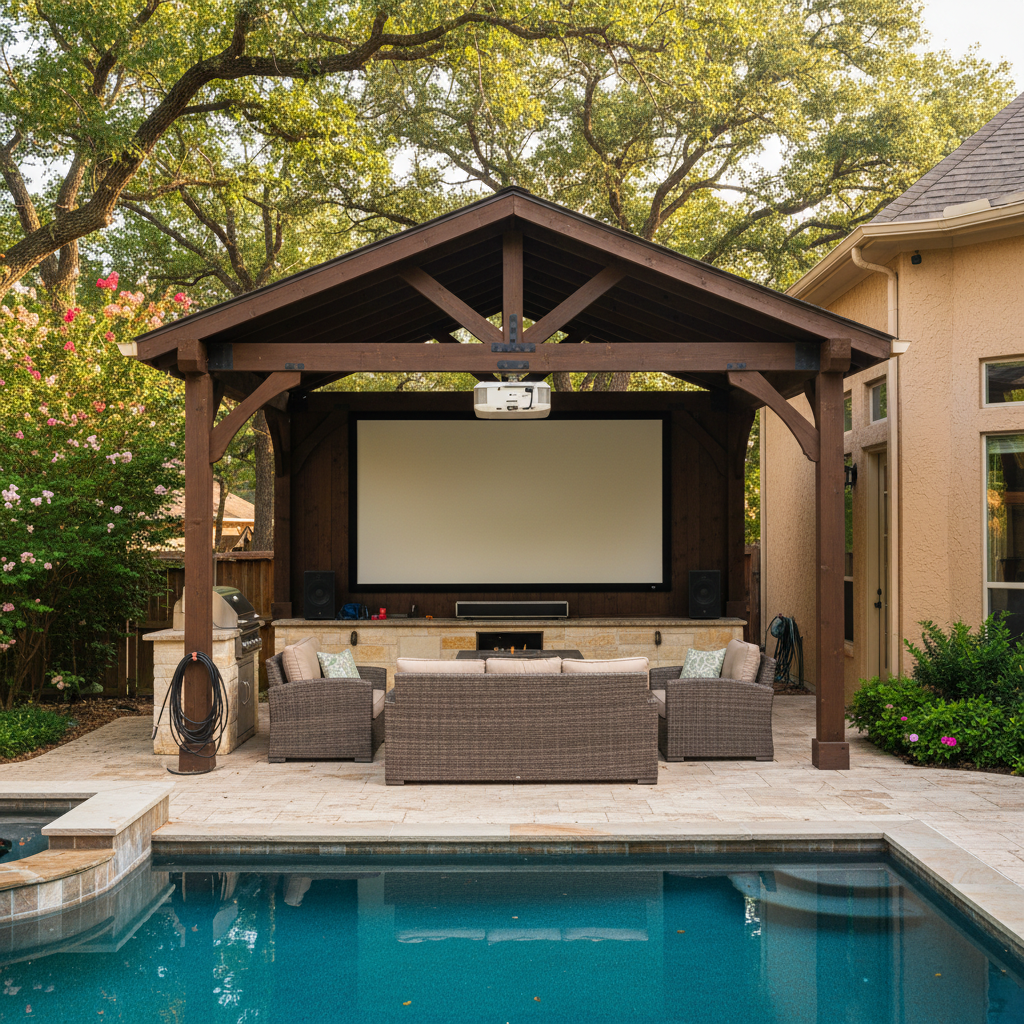
Alright, so you're dreaming of that big, beautiful projector screen for your home theater or media room. That's awesome! A good screen can really make your picture pop, way more than just projecting onto a plain wall. But before you jump in, there's a bit of planning involved to make sure it all goes smoothly. I've seen a lot of these projects come and go here in San Antonio, and I want to give you the straight scoop on what to expect.
Setting Your Timeline: What to Expect
Let's talk timelines. This isn't usually an overnight thing, especially if you're looking for a custom setup. From your initial thought to enjoying that first movie, you're probably looking at a few weeks, maybe even a couple of months. It really depends on how complex your project is and how busy we are. Here's a rough breakdown:
- Initial Contact & Consultation (1-2 weeks): You reach out, and we'll schedule a time to come out to your place. We'll talk about your vision, look at your space, and figure out what kind of screen makes sense for your projector and room lighting. This is where we discuss fixed frames, motorized screens, ambient light rejecting (ALR) screens, and all that good stuff.
- Quote & Approval (1-2 weeks): After the consultation, we'll put together a detailed quote for you. You'll review it, ask questions, and once you're happy, you'll give us the go-ahead.
- Ordering & Delivery (2-6 weeks): This is often the longest part. High-quality projector screens, especially custom sizes or specialized materials like ALR, aren't usually sitting on a shelf. They're often made to order and then shipped. Shipping times can vary, and sometimes there are delays, especially with certain brands. We'll keep you updated, of course.
- Installation (1 day): Once the screen arrives, the actual installation is usually pretty quick – typically a single day. We'll schedule a time that works for you, come in, get it mounted, and make sure everything is perfectly aligned with your projector.
So, if you've got a big game or a movie night planned for a specific date, make sure you're thinking about this lead time. Don't wait until the last minute!
What Happens During the Installation Process?
When we show up for the installation, here's what you can generally expect. First, we'll confirm the screen location and measurements one last time. We'll need to make sure the wall or ceiling can support the screen's weight. For fixed frame screens, mounting is pretty straightforward. Motorized screens, though, get a little more involved because we're dealing with power, and sometimes integrating them into a smart home system. We might need to run some low-voltage wiring, or even a dedicated power outlet if one isn't already close by. We're always careful to protect your home, laying down drop cloths and cleaning up any dust or debris. Our goal is to leave your space cleaner than we found it, with a perfectly installed screen.
How to Prepare Your Space
You can help make the installation day go smoothly. Here's what I recommend:
- Clear the Area: Move any furniture, decorations, or anything else that might be in the way of the wall or ceiling where the screen is going. We need clear access, simple as that.
- Identify Power Outlets: If you're getting a motorized screen, know where your nearest power outlet is. If you're unsure about power, let us know during the consultation so we can plan accordingly.
- Finalize Seating: It helps us immensely if you have your primary seating arranged roughly where you want it. This helps us confirm the ideal screen height and viewing angles.
- Have Your Projector Ready: If your projector is already mounted and calibrated, that's great. If not, we'll need to coordinate that part of the setup to ensure the screen and projector are perfectly matched.
A little preparation on your end saves everyone time and ensures we can focus on getting your screen just right.
Crucial Questions to Ask Before Signing a Contract
Before you sign on the dotted line with anyone, not just us at San Antonio Home Theater Pros, make sure you're asking the right questions. This protects you and ensures you're getting exactly what you expect.
- What type of screen material are you recommending and why? Don't just accept