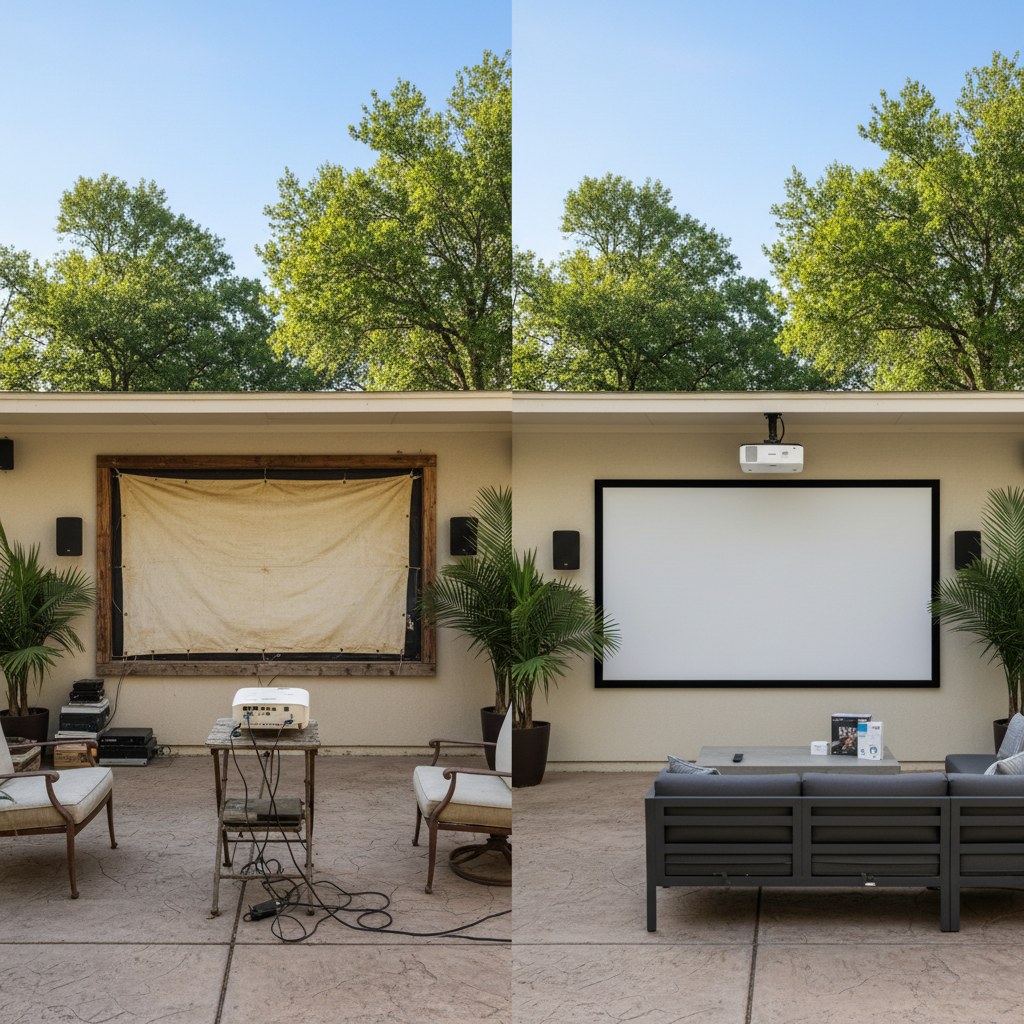
Alright, so you've decided to go big with your home entertainment and get a projector. Awesome choice! Now comes the next big question: where's this thing going to sit? You've essentially got two main options: mounting it up on the ceiling or just plopping it on a stand. Both have their place, but for San Antonio homeowners, one usually makes a lot more sense. Let's talk about it.
Ceiling Mount Installation: The Professional Look
When I talk to folks about getting a truly immersive home theater experience, a ceiling mount is usually what we're aiming for. Why? Well, for starters, it's clean. No cables running across the floor, no projector sitting on a coffee table where someone might bump it. It just looks professional, like it was always meant to be there.
Cost: This is generally the more expensive route up front. You're paying for the mount itself, which isn't usually cheap if you want something sturdy and adjustable. Then there's the labor for installation. We're talking about running power, HDMI cables, and sometimes even network cables through your walls and ceiling. That takes time and skill, especially if you want it done right without tearing up your drywall. But honestly, it's an investment in the overall aesthetic and functionality of your space.
Durability: Once that projector is securely bolted to a ceiling joist, it's not going anywhere. It's safe from accidental bumps, spills, or curious kids and pets. This is a big deal, especially if you've got a busy household. It's rock solid.
Maintenance: Maintenance is pretty minimal once it's installed. You'll still need to clean the lens and filter periodically, but you won't be adjusting its position constantly. The biggest thing to consider is bulb replacement; depending on your ceiling height, you might need a small ladder. But that's not an everyday chore.
Appearance: This is where ceiling mounts really shine. The projector is out of the way, often tucked neatly between joists or in a dedicated enclosure. All the wiring is hidden. It creates a sleek, dedicated home theater feel. No clutter, just pure picture.
Projector Stand Setup: The Flexible Option
Now, let's talk about using a stand. This is often the go-to for folks who are renting, or who just want something super flexible they can move around. It's definitely got its perks, but also some significant drawbacks, especially for a permanent setup.
Cost: This is almost always the cheaper option initially. You buy a stand, which can range from a cheap tripod to a more robust AV cart, and you just plop your projector on it. No installation costs, no running wires through walls. You plug it in, connect your source, and you're good to go.
Durability: This is where things get a bit dicey. A projector on a stand is vulnerable. It can get knocked over, especially if it's in a high-traffic area. If you've got pets or kids running around, that projector is a sitting duck. Even a slight bump can throw off your alignment, meaning you're constantly fiddling with it.
Maintenance: You'll be cleaning the lens and filter just like with a mounted projector. But you'll also likely be adjusting the keystone and focus more often because the stand might get bumped or moved. Plus, all your cables are going to be visible, which can be a tripping hazard and just generally messy.
Appearance: It's functional, but it's rarely elegant. You've got a projector sitting on a piece of furniture, with cables snaking down to your receiver or power outlet. It doesn't scream