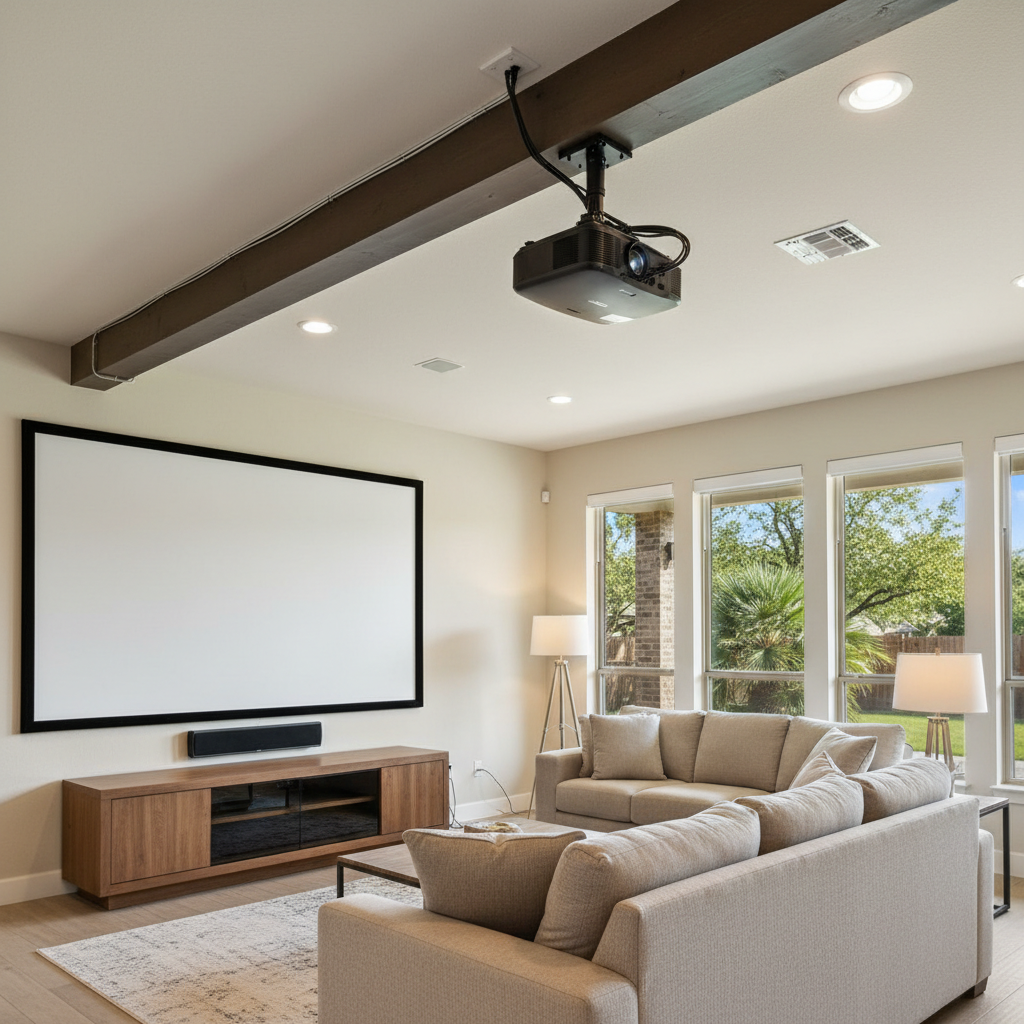
Thinking about a projector for your San Antonio home theater? That's a fantastic idea, really, but you've gotta consider our local climate. It's not just about picking the right screen; it's about making sure your investment lasts, especially with our wild weather swings.
When's the Best Time for Projector Installation?
Honestly, you can install a projector any time of year, but there are definitely better windows. This is especially true if you're thinking about outdoor setups or if your indoor space isn't perfectly climate-controlled yet. For indoor installations, we're mostly worried about getting the job done efficiently and comfortably for both you and my crew.
I'd say late fall through early spring is often ideal. Why? Because our summers here in San Antonio are brutal. Trying to run cables in an attic that's pushing 130 degrees Fahrenheit isn't fun for anyone, and it can slow things down quite a bit. Plus, if we're doing any work that requires doors open for extended periods, you'll really appreciate the cooler temps. You certainly don't want your AC fighting the outside heat while we're trying to get your screen perfectly aligned.
If you're eyeing an outdoor projector setup, definitely avoid the peak summer months. The heat and humidity are just too much for delicate electronics, and let's be honest, you won't want to be outside watching anyway. Spring and fall evenings are perfect for backyard movie nights.
Weather Conditions That Affect Projector Work
This is where San Antonio really throws us curveballs. It's not just the heat; it's everything else that comes with it.
- Humidity: Our humidity can be a killer. While modern projectors are built tough, prolonged exposure to high humidity — especially if they're not running — can lead to condensation issues or even mold growth inside if they're not properly sealed and maintained. This is more of a concern for outdoor units or projectors in unconditioned spaces like garages, of course.
- Dust & Pollen: We get a lot of dust, especially during dry spells, and then there's the pollen. Your projector has fans to keep it cool, and those fans pull air – and whatever's in it – through the unit. Over time, dust and pollen can clog filters and build up on internal components. This leads to overheating and reduced performance.
- Sudden Storms: You know how it is here. One minute it's sunny, the next you've got a torrential downpour and lightning. For outdoor setups, this means everything needs proper waterproofing and security. For indoor work, it just means we're extra careful with open windows or doors if a storm rolls in unexpectedly.
- Temperature Swings: Our days can go from chilly to warm pretty quick, and vice-versa. While your projector is designed to handle a range of temperatures, rapid, extreme changes can sometimes cause issues, especially with lamp life or internal components expanding and contracting.
Protecting Your Projector Investment Year-Round
Once your projector is installed, you want it to last. Here's what I tell folks:
Regular Cleaning is Key
Don't just let it sit there. Every few months, give your projector a good wipe-down. Use a soft, dry cloth. More importantly, check and clean the air filters if your model has them. Most manufacturers recommend this, and it's super easy. If you don't, dust bunnies will build up, restrict airflow, and your projector will overheat, shortening its lifespan. If you're not comfortable doing it, we can always help out during a routine maintenance check.
Mind the Environment
For indoor projectors, keep your room at a consistent, comfortable temperature. Avoid extreme heat or cold. If your projector is in a media room that you don't use often, still try to keep the temperature stable. For outdoor projectors, always cover them when not in use. Better yet, bring them inside if they're not permanently weather-sealed. You wouldn't leave your fancy TV out in the elements, would you?
Surge Protection is Non-Negotiable
This is a big one, especially with our summer thunderstorms. Always plug your projector, and all your home theater equipment, into a quality surge protector. A power surge can fry your electronics in an instant, and it's a lot cheaper to replace a surge protector than a projector lamp or the whole unit. Don't skimp on this. I've seen too many good systems ruined by a rogue lightning strike.
Professional Check-ups
Just like your car, your home theater system can benefit from a periodic check-up. We can clean internal components, check connections, and make sure everything's running optimally. This is especially true for projectors, where lamp hours, fan performance, and lens cleanliness directly impact picture quality and longevity. San Antonio Home Theater Pros can schedule these check-ups to keep your system performing its best.
Look, a home theater projector is a fantastic addition to any home, giving you that big-screen experience right in your living room or backyard. Just be smart about our San Antonio climate, and you'll enjoy crisp, clear images for years to come.